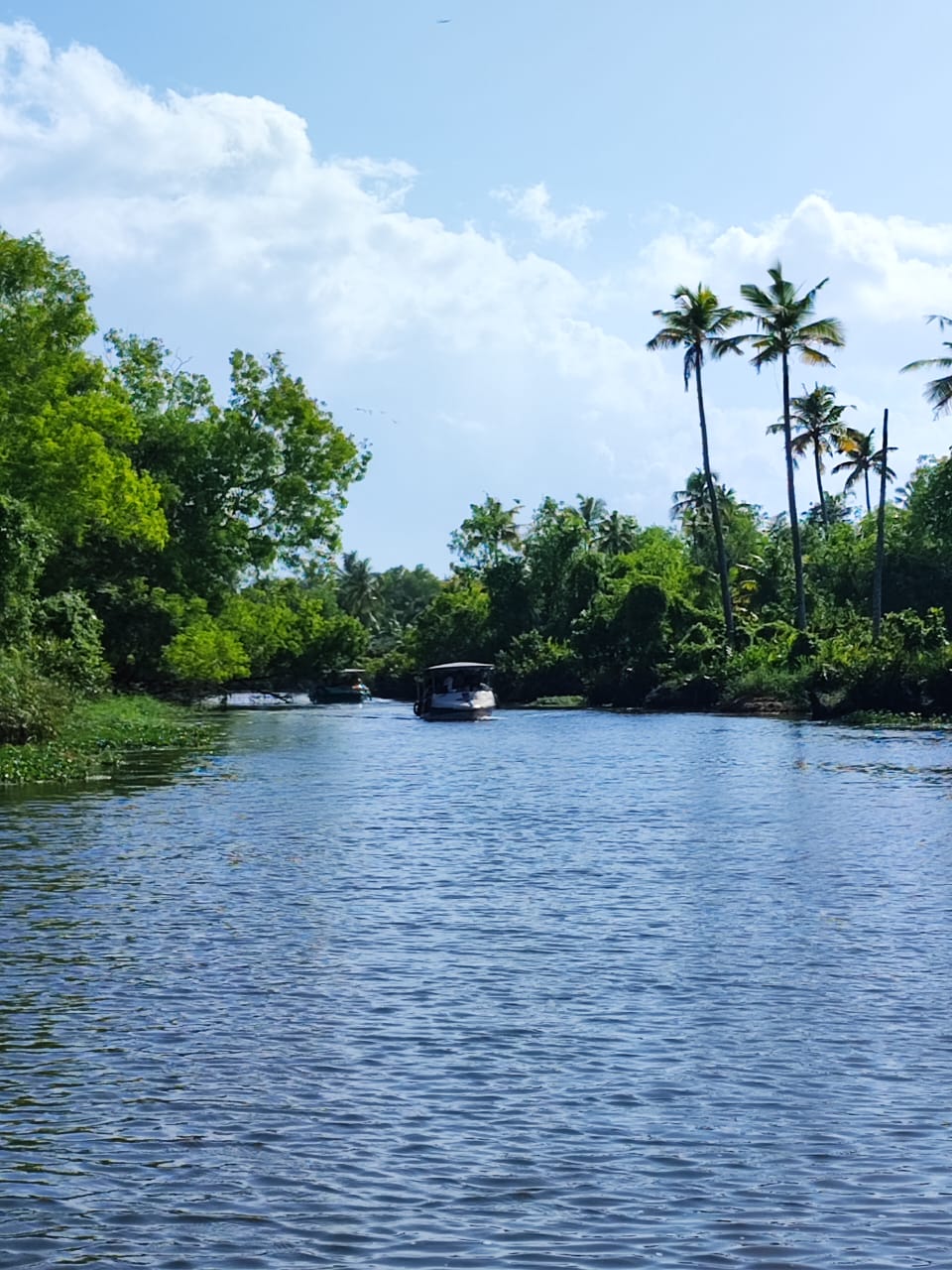
Previously, we explored Kochi, Kumarakom, and Alleppey, immersing ourselves in the breathtaking beauty of Kerala’s backwaters. From tranquil waterways to the charm of a houseboat journey, each destination offered an unforgettable glimpse into the serene and picturesque landscapes that define this enchanting region.
This time, our journey took us through Kerala’s southern coastal gems and its breathtaking hill stations, exploring Poovar, Ashtamudi, Thekkady, and Munnar. Each destination unveiled a distinct facet of the region, from serene backwaters and mangroves to misty mountains, offering a truly diverse and enriching experience.
We added Kanyakumari, which is part of Tamil Nadu, to our Kerala trip since it is within drivable distance from Trivandrum. Kanyakumari is the southernmost tip of mainland India. Let me take you through our 10-day itinerary.
The people of Kerala (Keralities) are known for their warmth, humility, and deep-rooted spirituality. The cultural fabric of the state is a harmonious blend of Hinduism, Christianity, and Islam. Malayalam is the native language, and those born and raised in Kerala who speak it are known as Malayalees. It’s also not uncommon to find a strong connection to the Middle East, as many families have members working abroad, particularly in Gulf countries. The 2016 Kerala Migration Survey found that nearly 90% of Kerala’s migrants were employed in nations within the Gulf Cooperation Council.
Coming to food, which is an integral part of any culture……Kerala, being a coastal state, you can look forward to delicious fish preparations. Here are a few culinary delights we had an opportunity to try
- The Pearl Spot / Karimeen in the local language is the state fish of Kerala.
- Nadan Kurumulaku Kozhi – Kerala style pepper chicken
- Pazham Pori, or banana fritters
- Payasam – A traditional dessert made with rice
- Sadya is a traditional vegetarian feast
- Idiyappam, noodle-like rice flour steamed strands
- Appam is a soft and fluffy rice pancake
- Puttu is a cylindrical steamed rice cake, often served with Kadala curry, a spicy black chickpea curry.
Courtesy of The Leela Ashtamudi and The Spice Village Thekkady, I learned the recipes for Payasam, Mix Veg Thoran (a dry vegetable dish combined with coconut), and Chicken Pal Curry through cooking demonstrations by their chefs.
10 Day itinerary – Kanyakumari, Poovar, Ashtamudi, Thekkady, Munnar
Namaskkāram/Vanakkam (വണക്കമ്) – Hello!
Day 1: Mumbai – Trivandrum – Kanyakumari
Flying time from Mumbai to Thiruvananthapuram/Trivandrum is about 2 and a half hours. From the Trivandrum airport, we had a hired car take us to Kanyakumari, which is about 90 kms and took us about 3 hours with a stopover for lunch.
Kanyakumari, nestled at the southernmost edge of India, offers a rare spectacle where the Bay of Bengal, Arabian Sea, and Indian Ocean meet in a stunning aquatic embrace. This coastal gem in Tamil Nadu is celebrated for its awe-inspiring sunrises and sunsets that paint the sky in vivid hues. Among its iconic landmarks are the Vivekananda Rock Memorial and the majestic Thiruvalluvar Statue—both rising from the sea and reachable by a short ferry ride, adding a sense of adventure to the spiritual and scenic experience.
We had booked ourselves at Annai Resorts and Spa, one of the best resorts in Kanyakumari. Across the road from the back gate of the property is the beach road with a promenade to soak in the beauty of the lashing sea.
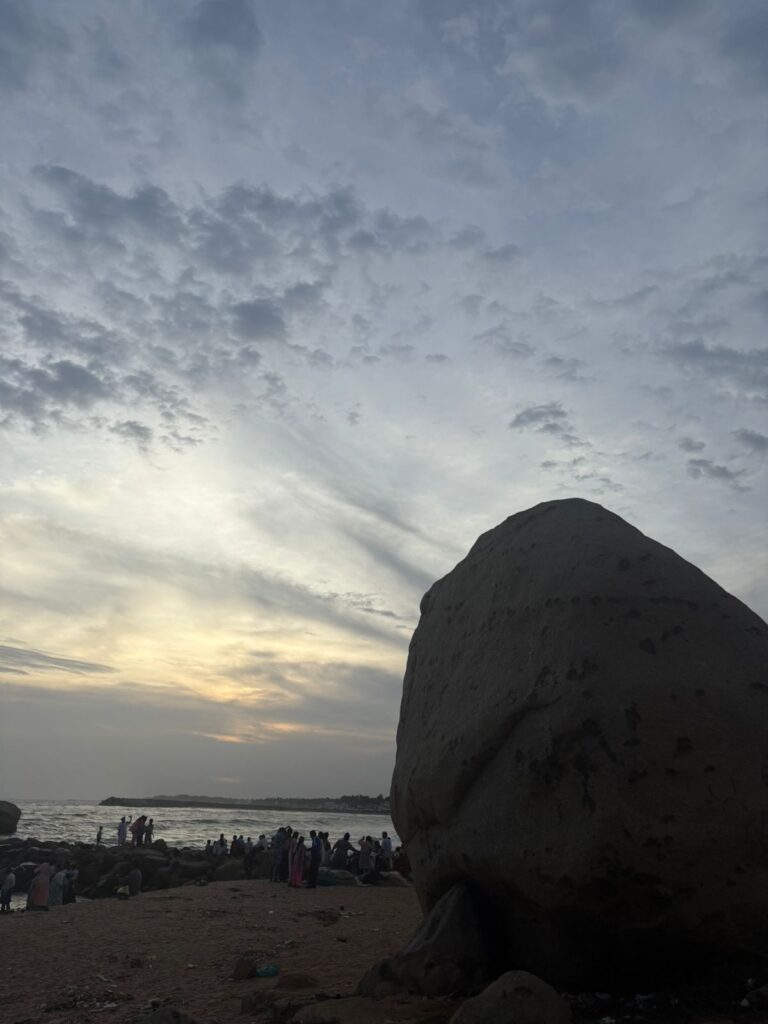
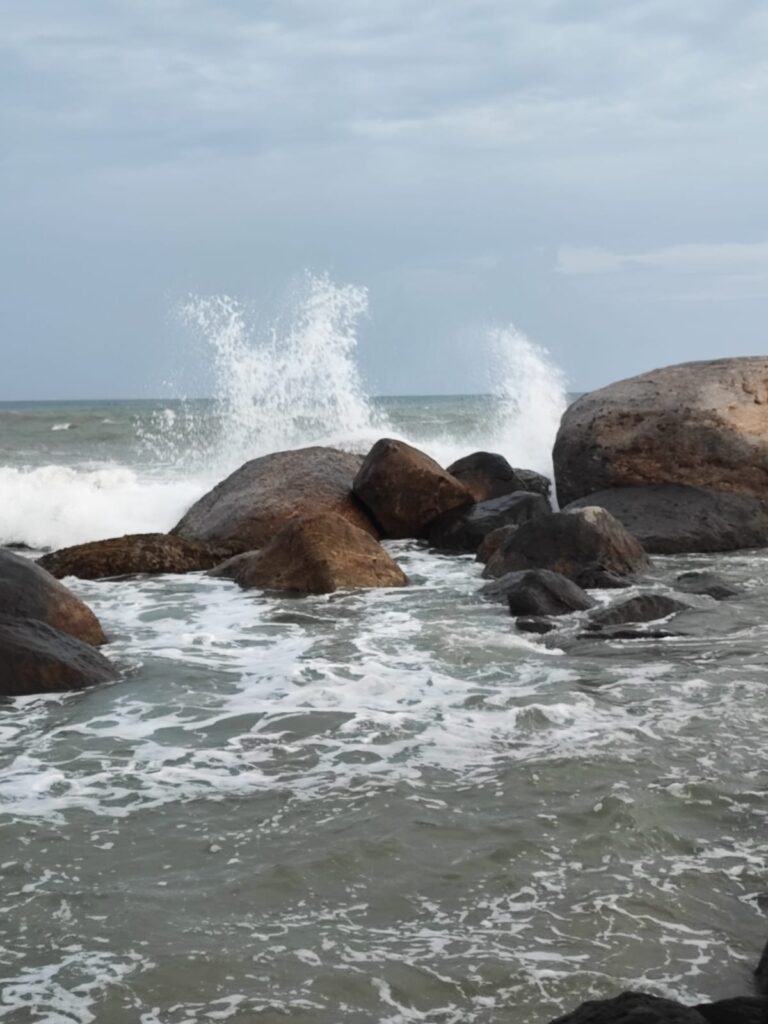
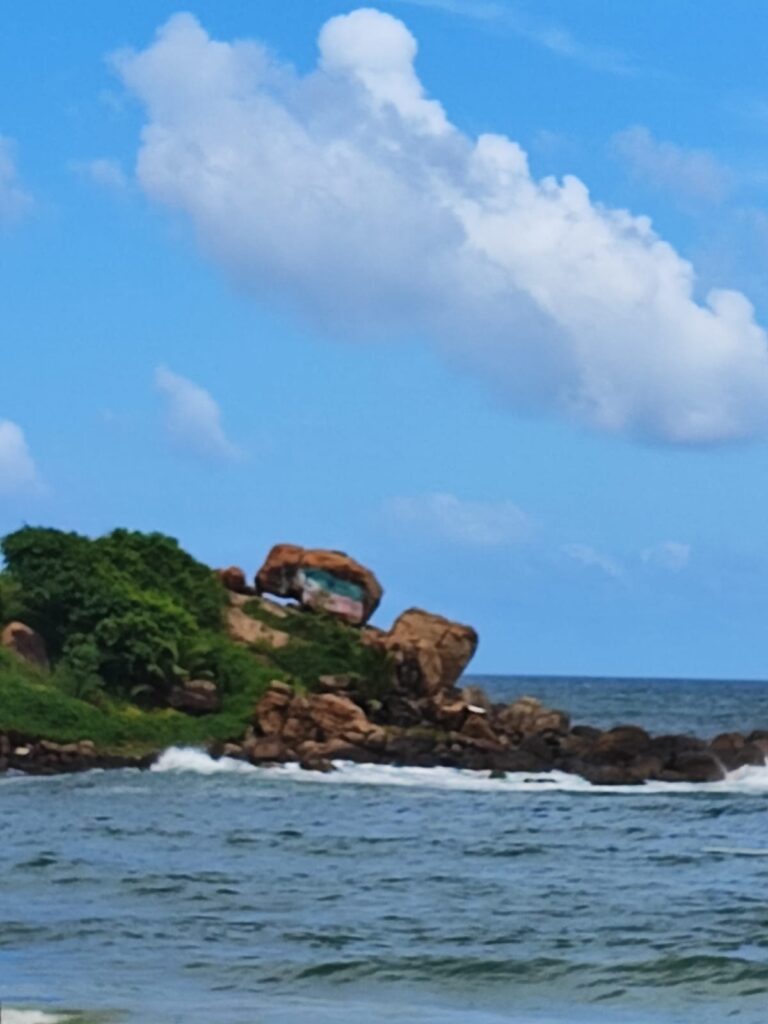
With the evening free to unwind, we made our way to Sunset Point, where nature staged a spectacular show. The sky was ablaze with hues of crimson and gold, casting a warm glow over the jagged boulders as waves crashed rhythmically against them.
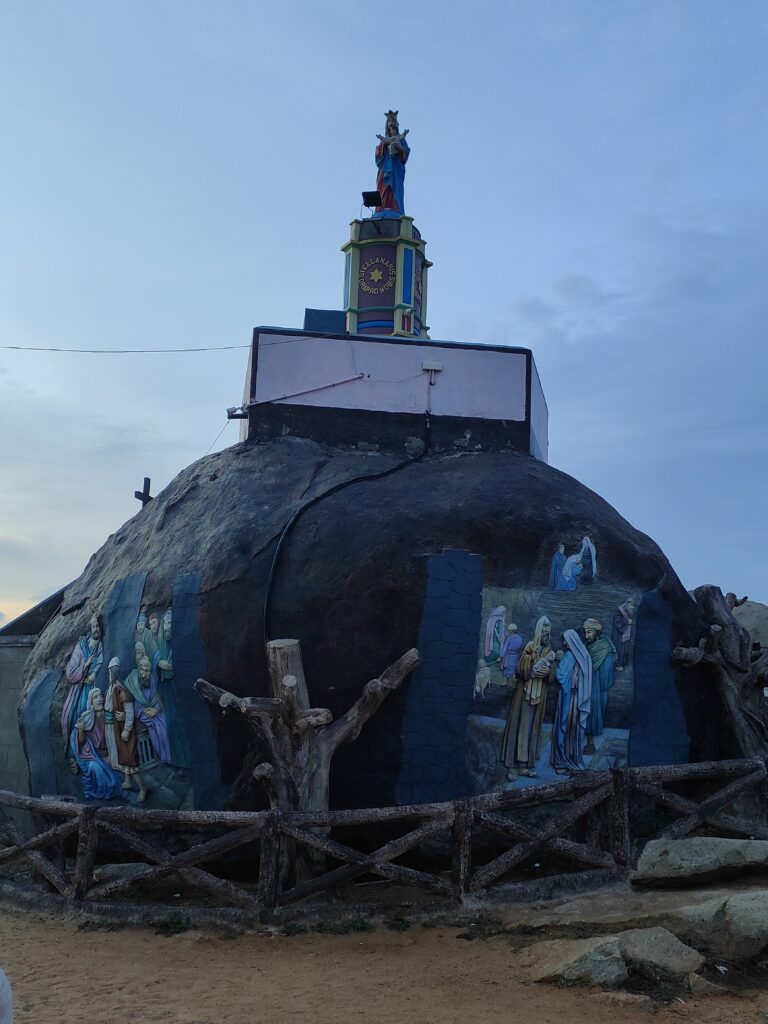
Day 2: Kanyakumari – Poovar
We took a morning ferry to the Swami Vivekananda Rock Memorial and the majestic Thiruvalluvar Statue. We were aghast to see the long snaking queue for the ferry, which would be a kilometre long, then someone guided us that we could take the VIP Queue. The charges for the normal queue are just Rs. 50/- per person, and for the VIP queue, Rs. 300/- per person.
Travel Tip #1 - Take the VIP Queue for the ferry to Vivekananda Rock Memorial to save long waiting
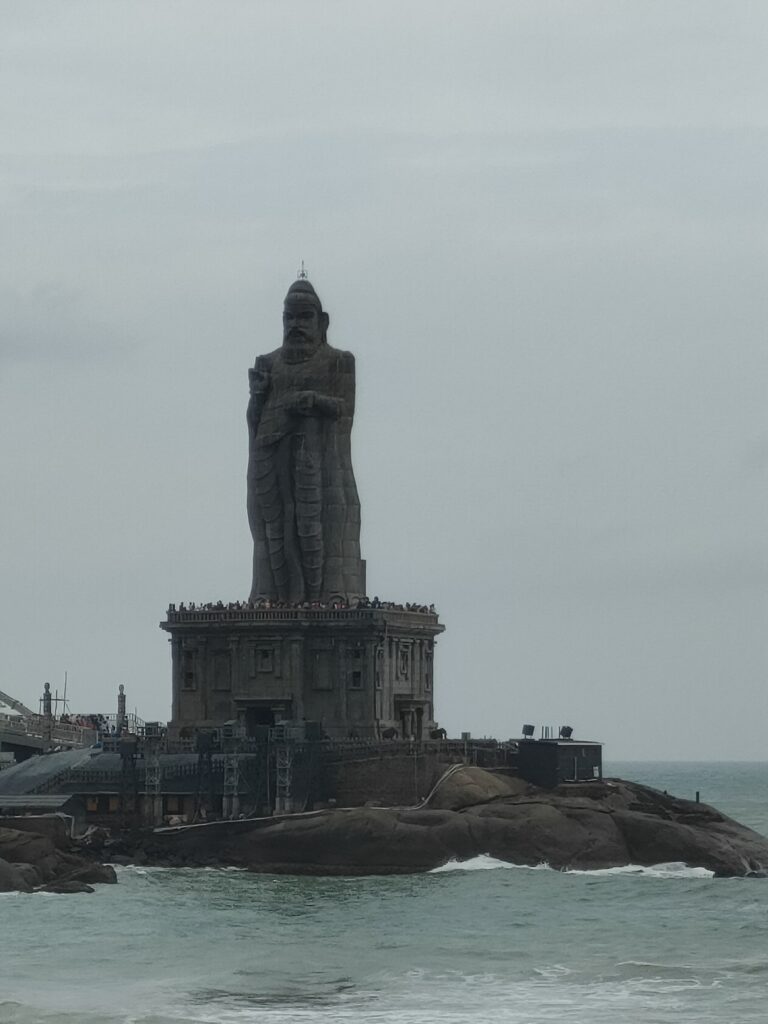
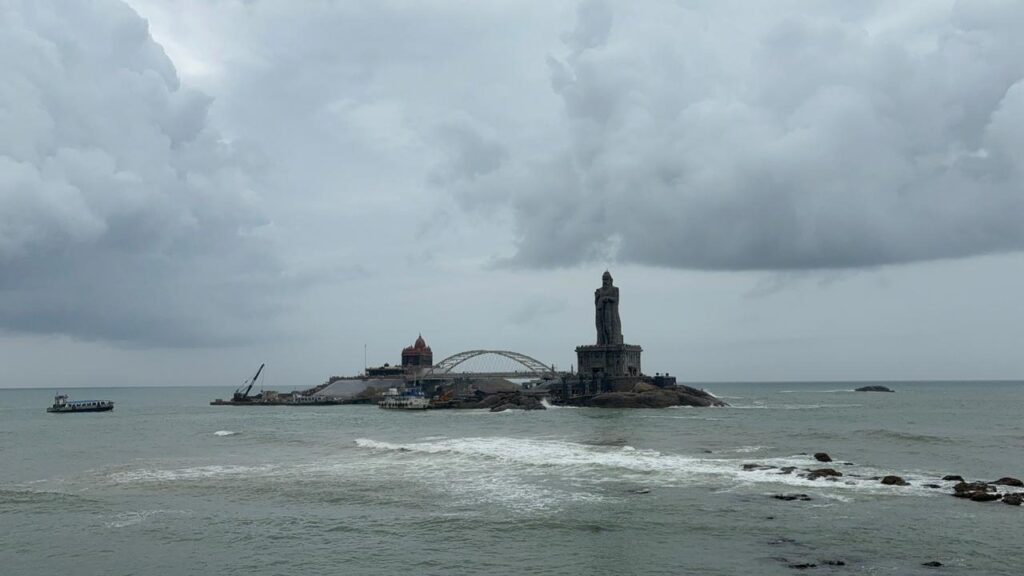
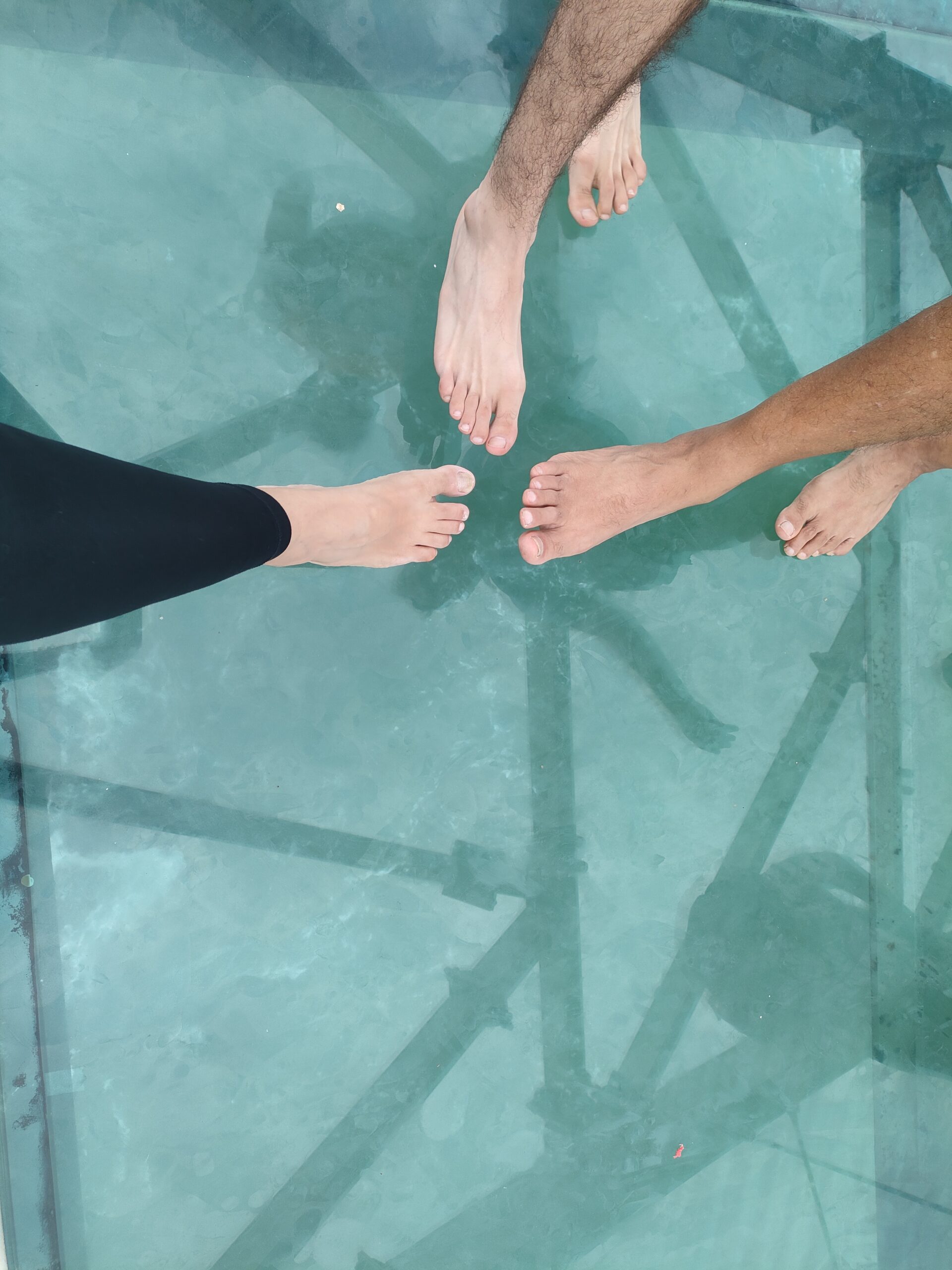
The ferry takes about 10-15 minutes to the structures located about 500 meters from the mainland. Once you disembark there, you need to buy another ticket for Rs 30/-. The Swami Vivekananda Memorial was built in 1970 to honour Swami Vivekananda, who is believed to have meditated on this rock in 1892 before his historic speech at the Parliament of the World’s Religions in Chicago.
- Vivekananda Mandapam, which includes a meditation hall (Dhyana Mandapam) and a life-size bronze statue of Swamiji.
- Shripada Mandapam, said to bear the footprint of Goddess Kanyakumari
- Souvenir Shop housing Books, Ayurvedic Products, Bags, and more
Standing tall beside the memorial is the Thiruvalluvar Statue, a 133-foot stone sculpture dedicated to the legendary Tamil poet and philosopher Thiruvalluvar. He is the author of The Thirukkural, one of the most revered works in Tamil literature—a timeless collection of 1,330 couplets (kurals). The text is divided into three major sections:
- Aram – Virtue: moral values and ethical living.
- Porul – Wealth: governance, leadership, and social responsibilities.
- Inbam – Love: personal relationships and emotional fulfillment.
The Thiruvalluvar Statue itself represents the above, the 38-foot pedestal represents Aram (virtue), the 95-foot statue above it represents Porul (wealth) and Inbam (love).
A newly added glass bridge now connects the two monuments, offering a thrilling walk above the sea.
Travel Tip #2 - Keep at least 2-3 hours for the visit to Vivekananda Rock and Thiruvalluvar
One needs to walk barefoot while on the island structure. The footwear can be deposited at the counter, and a token can be taken. Luckily, it wasn’t too hot a day and it was easy to walk around. The time just flew as we were busy soaking in the beauty of the panoramic views. The location—surrounded by the confluence of three seas—makes it a serene and powerful place for reflection.
Travel Tip #3 - During summers, carry a pair of socks to walk around as the floor tends to get very hot.
After disembarking from the ferry, we visited the ancient temple nearby, behind which one can bathe in the Sangam (confluence) of the Arabian Sea, Indian Ocean, and the Bay of Bengal.
After a quick freshening up at the hotel, we left for Poovar, about a 2-hour drive from Kanyakumari. En route, we stopped for lunch at Hotel Daawat, and we relished the fried prawns.
We checked in at Isola Di Cocco Beach Resort, Poovar, and since we had a long day, we just enjoyed the Spa services at the resort in the evening.
Day 3: Poovar
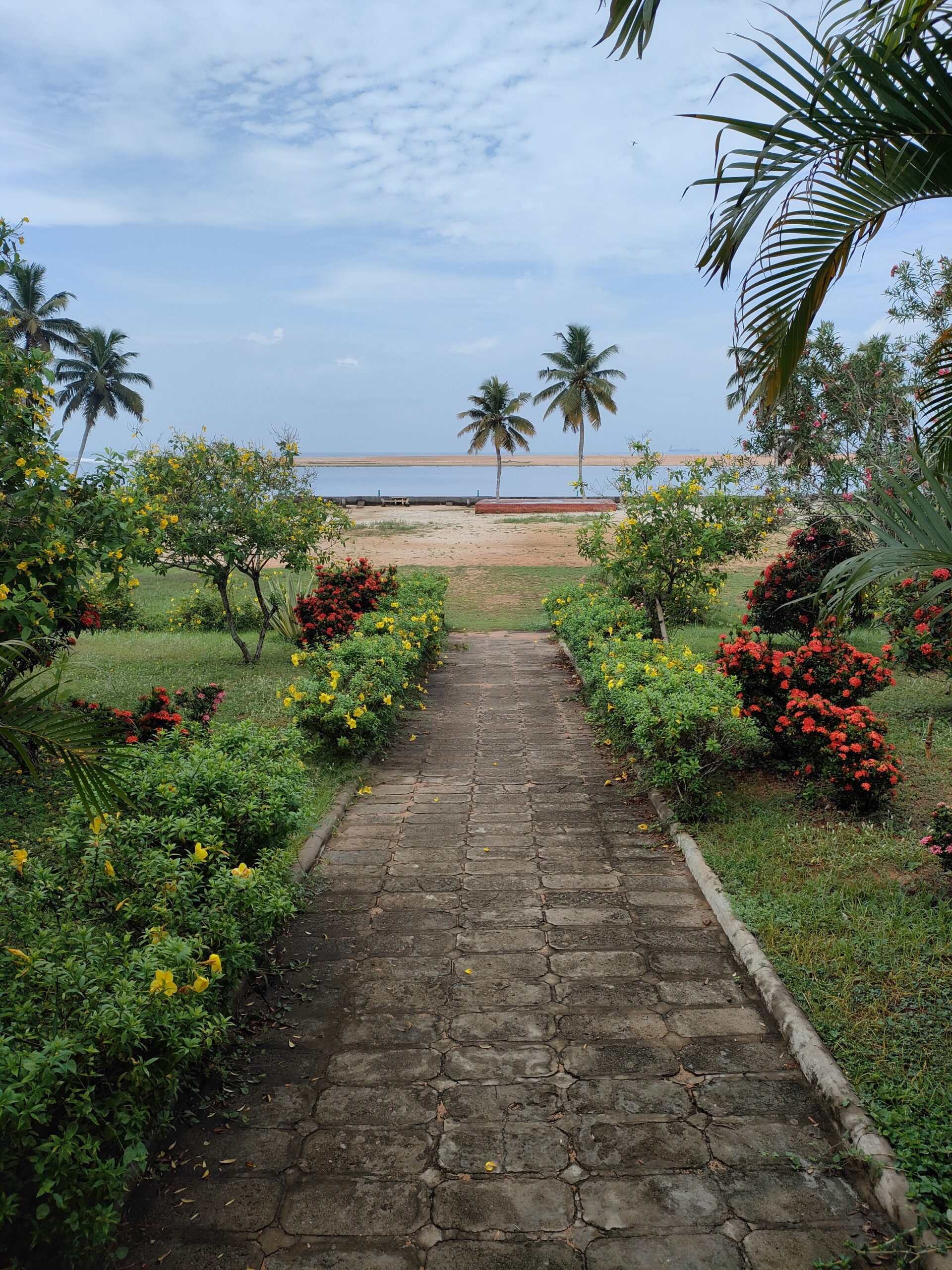
Among its coastal gems, Poovar is a serene coastal village where the Neyyar River meets the Arabian Sea. It is known for its golden sand beaches, tranquil backwaters, and its enchanting mangrove forests, where winding waterways carve through lush greenery.
The best part of the Isola Di Cocco Beach Resort was that we saw the “golden beach” across the backwater touching the resort property. In a single sight, you are seeing the backwaters and the golden sand beach, and the roaring ocean.
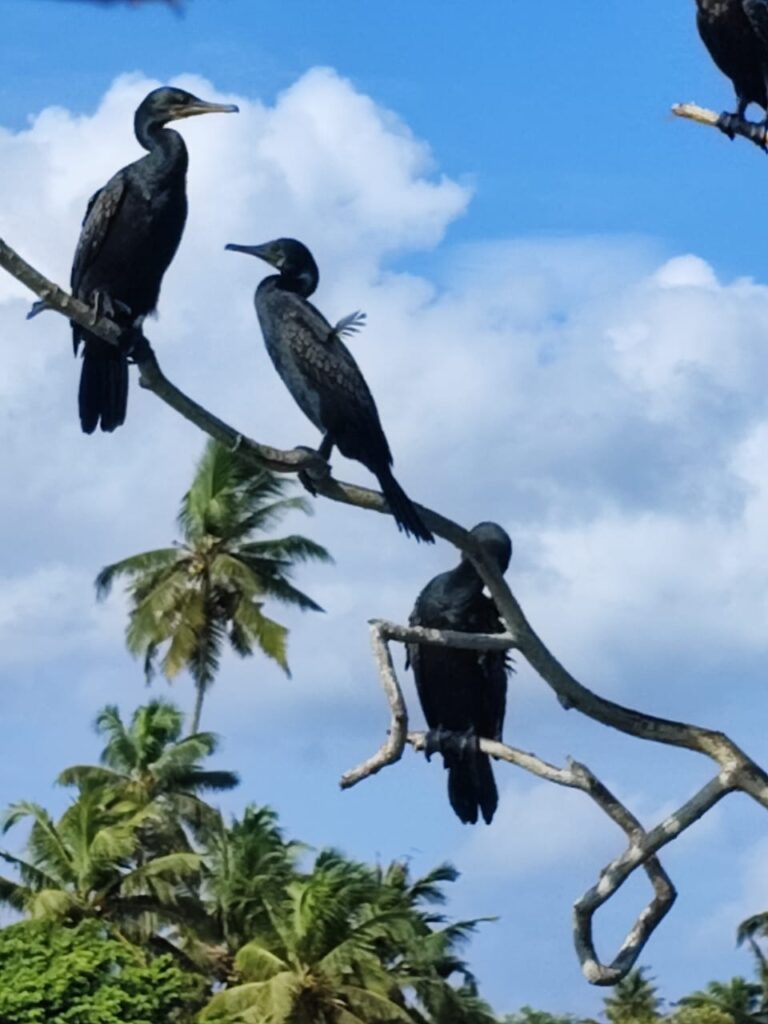
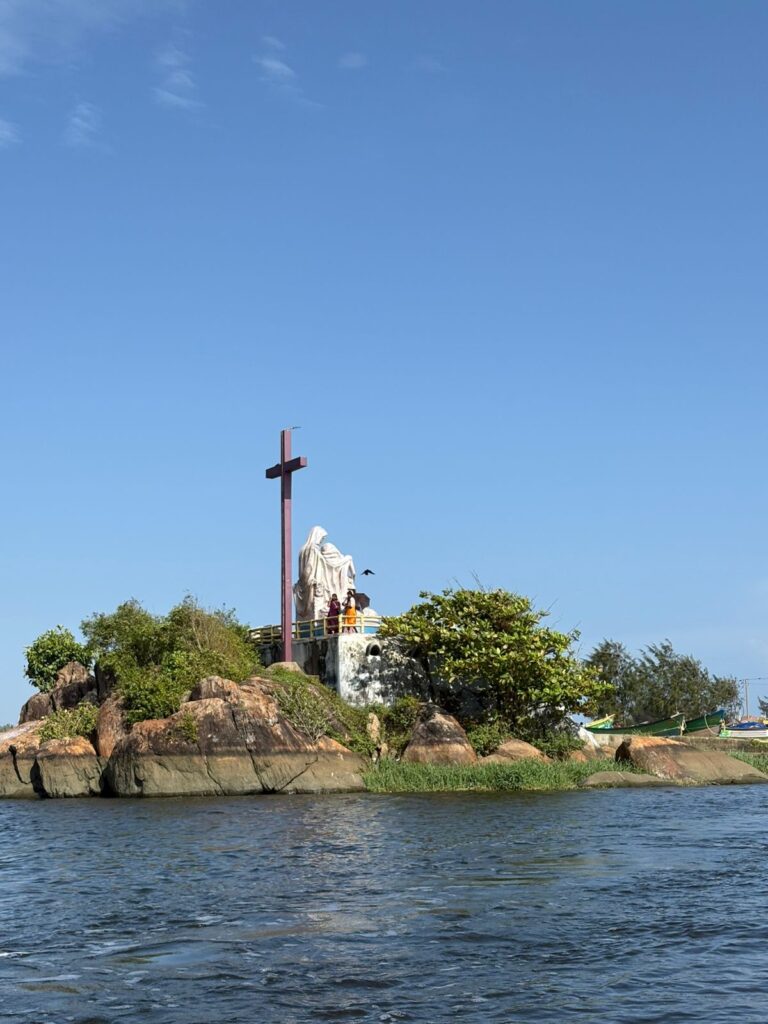
We had a boat pick us up from the resort property and take us for a sail in the backwaters. The serene mangrove tour is a one-hour journey through winding waterways and lush greenery that’s sure to leave you refreshed. If you are keen, you are likely to spot varied feathered friends during the ride.
Travel Tip #4 - The backwater boat ride is great opportunity for bird watchers
At the end of the tour, we were dropped at the golden beach across the property. The beach is a sight for the eyes only; swimming isn’t allowed here due to the strong currents, huge waves, and the sloping terrain of the beach. We sat there enjoying the fresh coconut and the roaring waves. There are horse and camel rides available for those interested.
We called the resort, and the boat picked us up from the golden beach, and we were back at the resort across the water.
We had a relaxing evening at the resort, exploring the property, the pool, and the greenery.
Day 4: Poovar – Ashtamudi
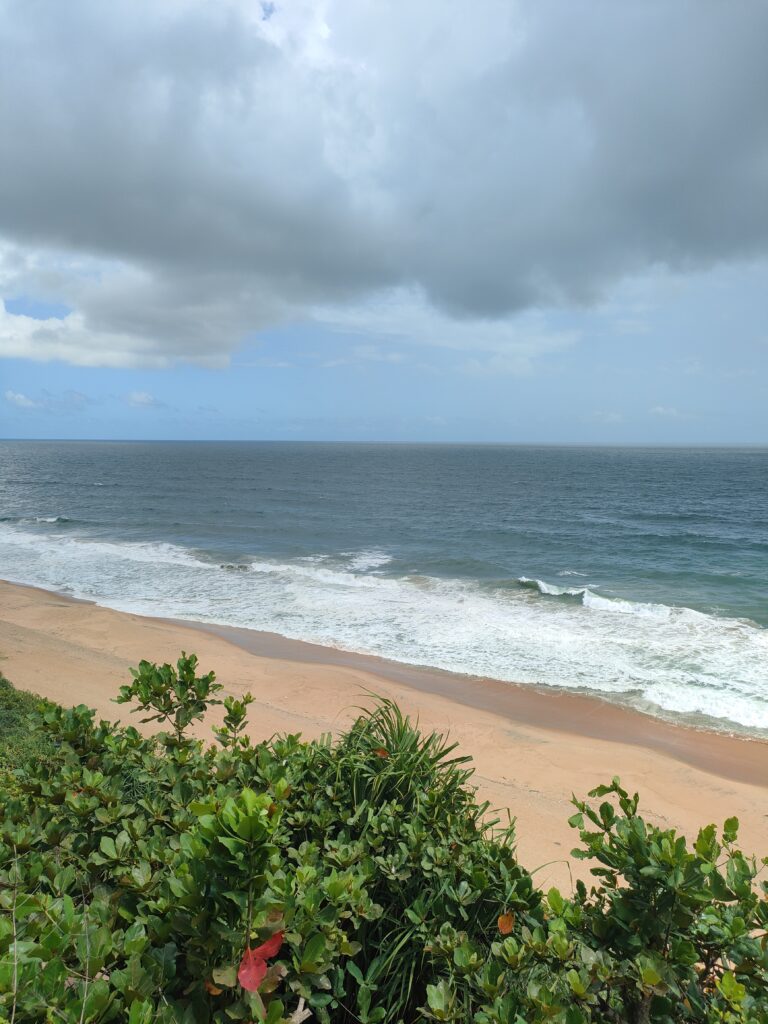
After a hearty breakfast, we started for Ashtamudi, which is about 3 hours from Poovar or Puvar. It took us longer as we made a couple of quick sightseeing stops en route. First was the Kovalam Beach, the Padma Swamy temple in Trivandrum from outside (you need at least 2-4 hours if you want to visit the inside, plus it’s closed from 10 am to 4 pm). After that, we stopped at the Cliff restaurant, which had a great view of the Varkala Beach.
We checked into yet another beautiful property, The Leela Ashtamudi, A Raviz Hotel
We had a lovely view of the lake from our room. We arrived in time for a half-hour evening cruise on the lake. The hotel’s boat cruises guests around the lake, offering a chance to unwind with serene waters, stunning vistas, and a breathtaking sunset.
After the cruise, we enjoyed the High Tea and then the indoor activities at the property. Liked the fact that the hotel promotes local Indian Culture through the flute performance in the mornings and the dance performance in the evening.
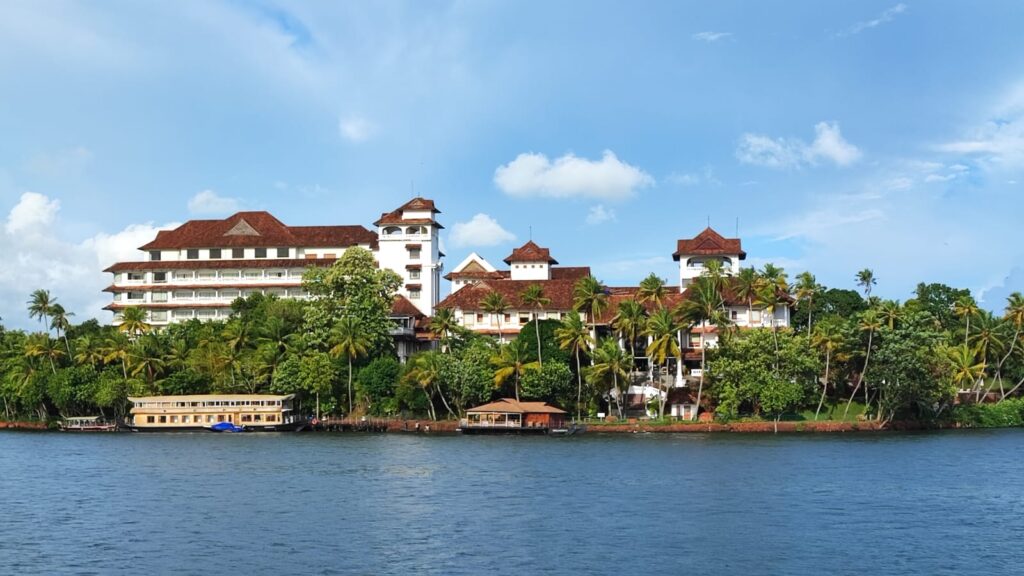
Day 5: Ashtamudi
Ashtamudi is a sprawling lake in Kerala’s Kollam district is often described as resembling an octopus or a palm leaf, and it serves as a gateway to the famed backwaters of the state. The name Ashtamudi comes from the Malayalam words “Ashta” meaning eight and “Mudi” meaning braids or branches.
Ashtamudi is all about enjoying the serenity and rejuvenation. There aren’t many things that you can do around the property, and hence, if you are looking at relaxing and spending time alone or with family, then this is the destination to go for.
Since we had the morning to ourselves, we decided to take a tour to Munroe Island, about an hour’s drive from our hotel. One can take a boat from the property to Munroe Island, but we found that to be expensive, so we decided to drive there and then take a local boat ride around the island. We stopped for lunch at All Spice restaurant, one of the best ones in town.
Munroe Island is a group of eight small islets located at the confluence of Ashtamudi Lake and the Kallada River. We decided to go for a 2-hour boat trip around the islands and the mangroves. There is even a 4+ hour trip taking you around all 8 islands.
Travel Tip #5 - Don’t miss the elephant mangrove tour of the Munroe Island
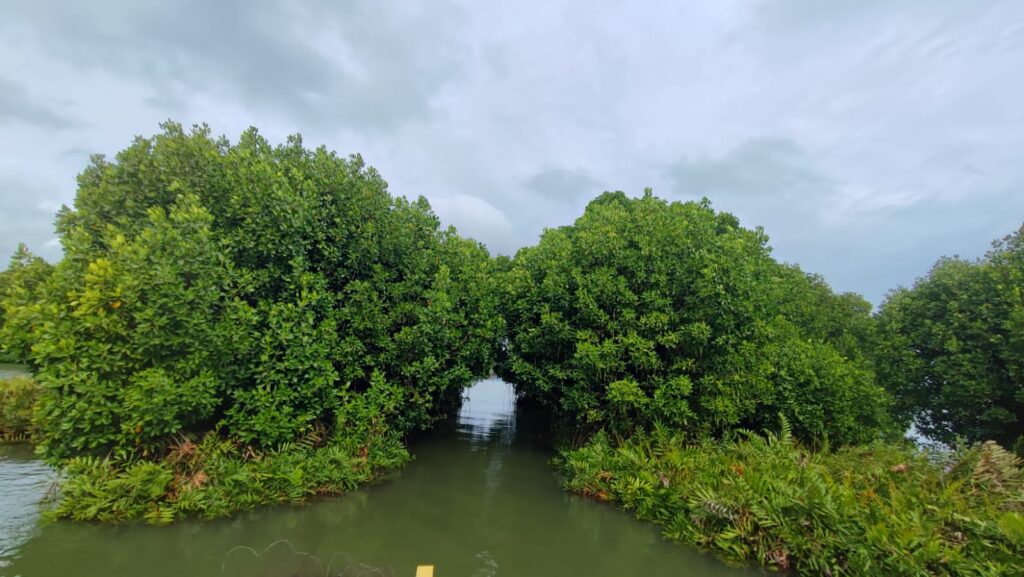
The “elephant mangroves” of Munroe Island are a fascinating natural formation where the roots and trunks of mangrove trees resemble the shape of elephants’ trunks, legs, and all! Nestled within the narrow canals of this serene backwater destination, these mangroves create a magical, almost sculptural landscape that’s best explored by boat/canoe. As you glide beneath their arching limbs, it feels like nature itself is telling a story in green and shadow.
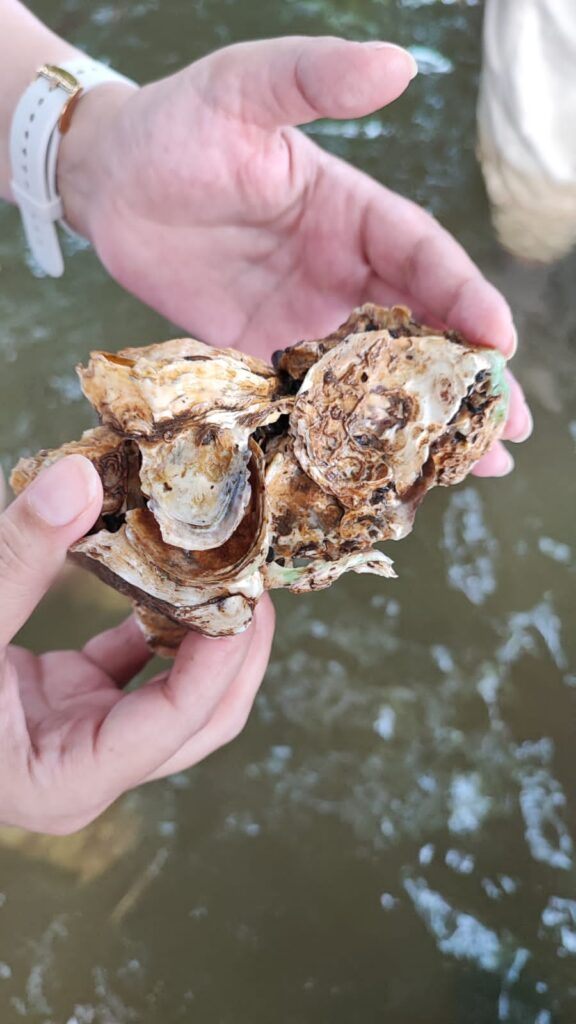
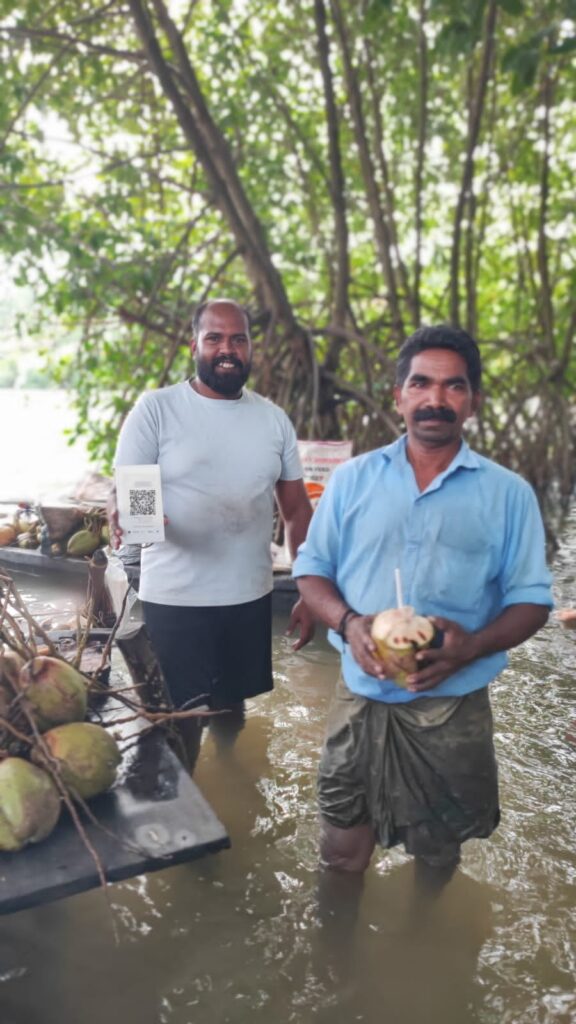
The boatman allows you a hand at fishing and at a point to get down in the knee-deep waters. You can enjoy a coconut and tapioca snack while standing in the cool shade of the mangroves, and your feet in the water. The amazing part was that the vendor accepts electronic payment through your phone… You can’t help but feel proud about India’s digital progress.
Day 6: Ashtamudi – Thekkady
After enjoying a hearty breakfast, we set off on our journey to Thekkady with a planned stopover at a dental clinic. We encountered a minor dental emergency the night before and managed to locate a clinic in Kollam. To our great relief, despite it being the weekend, Dr. Nehas H at Smyle Artz Dental graciously agreed to see us after our call the previous night. We were genuinely impressed to discover a state-of-the-art facility, complete with in-house 3D scanning, in a small town like Kollam. Later came to know that Kollam has always been a prosperous town as it is an ancient port city and also known to be the “Cashew Capital of the World”.
This was going to be one of the longest car drives for us on this trip. After a couple of hours, we took a halt for lunch at Hotel Highway Kitchen and then were all set for our remaining travel for the day. It took us about seven hours to reach our destination, Spice Village Thekkady – A Cgh Earth Experience, even though the distance can be covered in about 4 hours if one goes non-stop. Due to the rains and us taking breaks along the way to enjoy the scenic surroundings and the majestic waterfalls, one of them being Valanjangana, because the journey is more important than the destination.
On reaching, we enjoyed the high tea and then the cultural dance performances of Bharatnatyam and Kuchipudi at the resort.
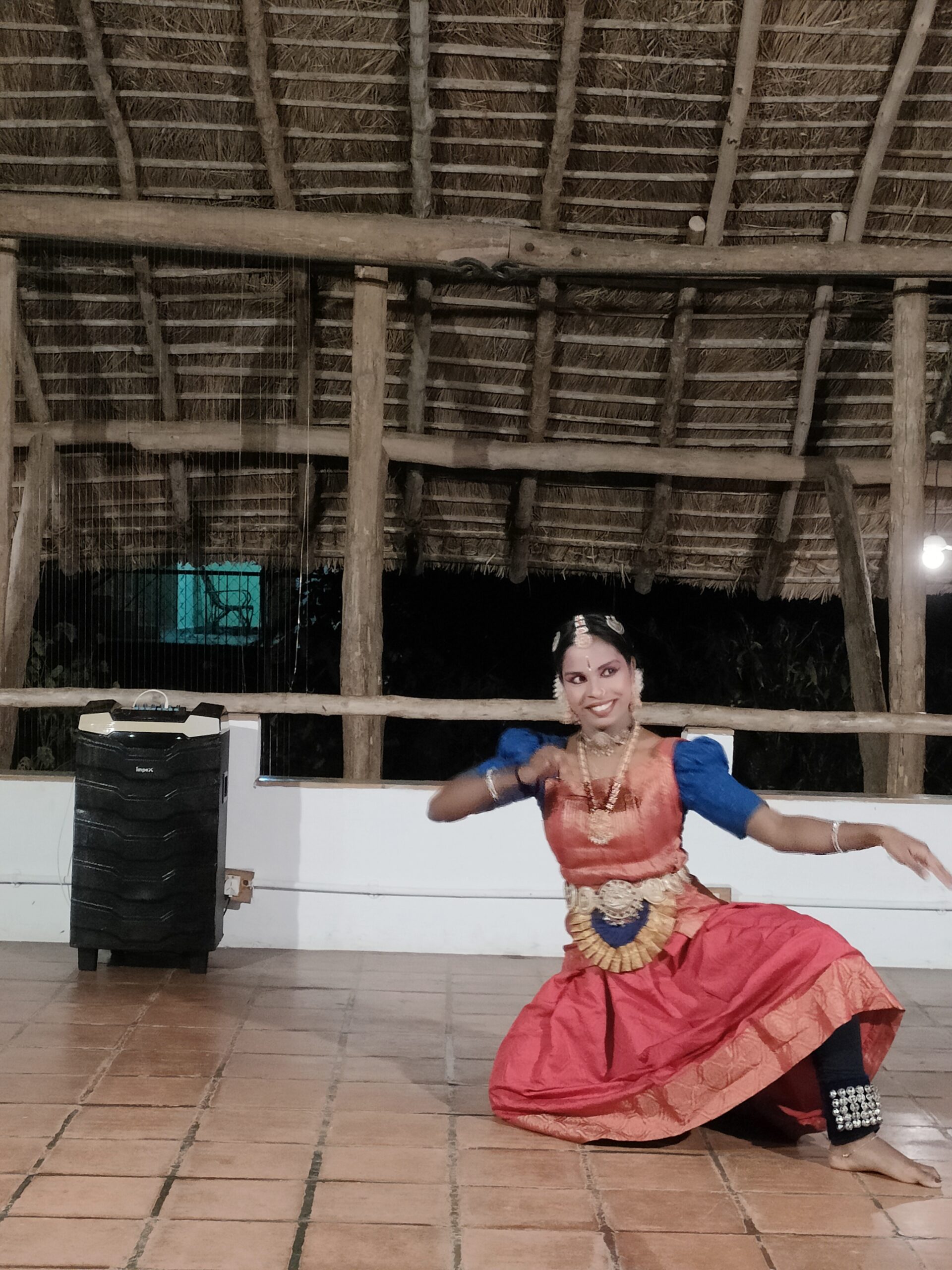
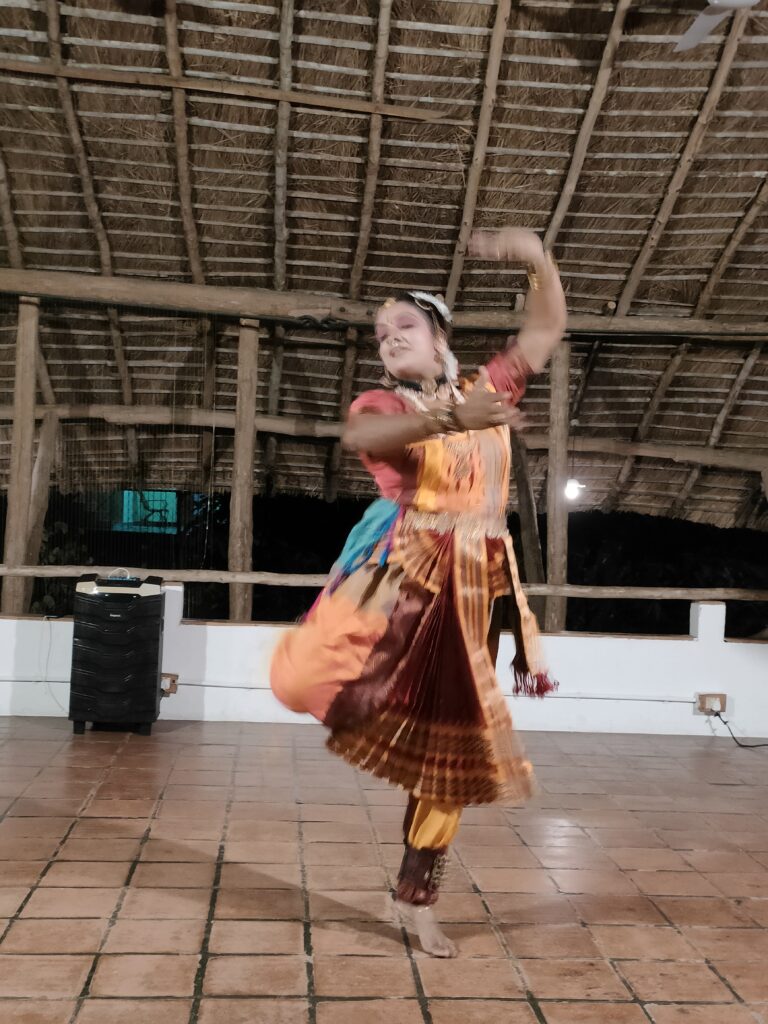
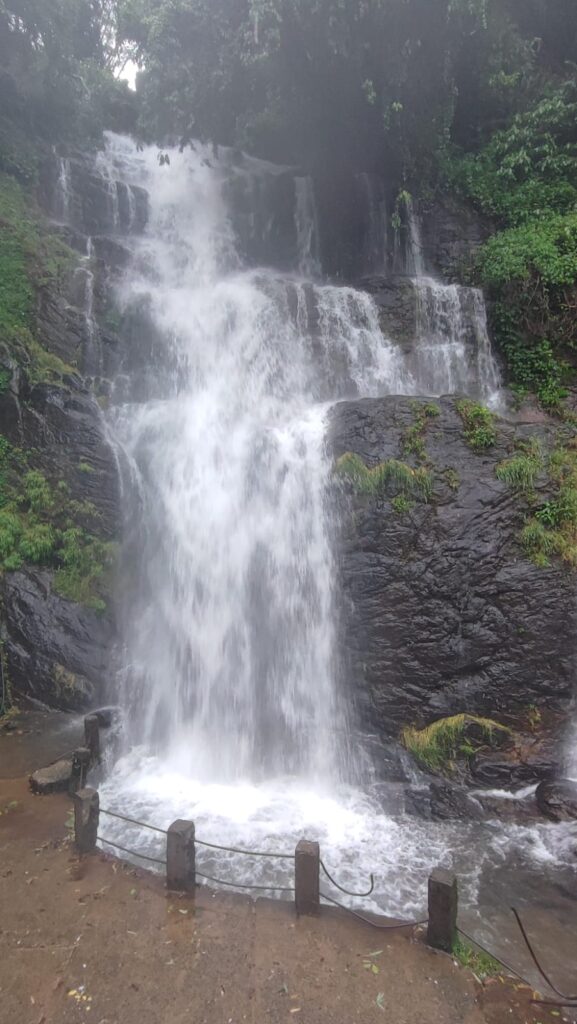
Day 7: Thekkady
The property of Spice Village Thekkady, belonged to the first ranger A.W.Woods during the British era in India, hence the resort have a small area which dedicated to him with artifacts from the bygone era and his personal belongings, where you can play inhouse games or sit and relax with a book while having a coffee or a drink. This is an eco-friendly resort, it has its own water filtration and bottling plant within the premises, they hire tribals to come and do the thatched roofs of the cottages, they even have a menu based on the vegetables grown on the property.
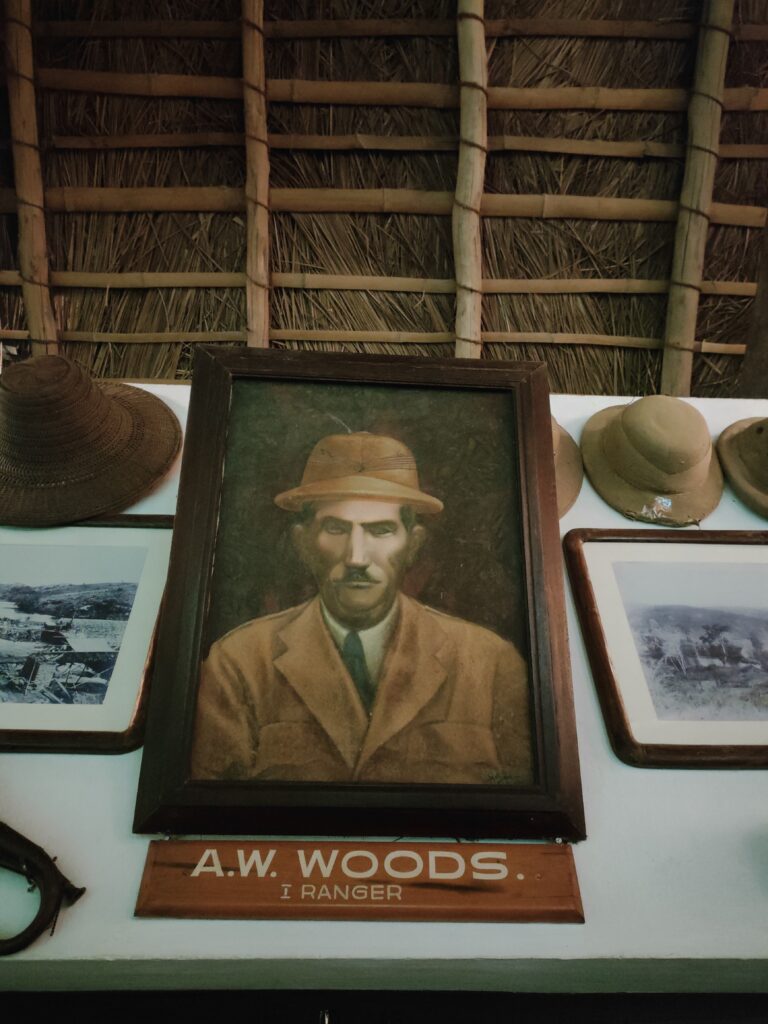
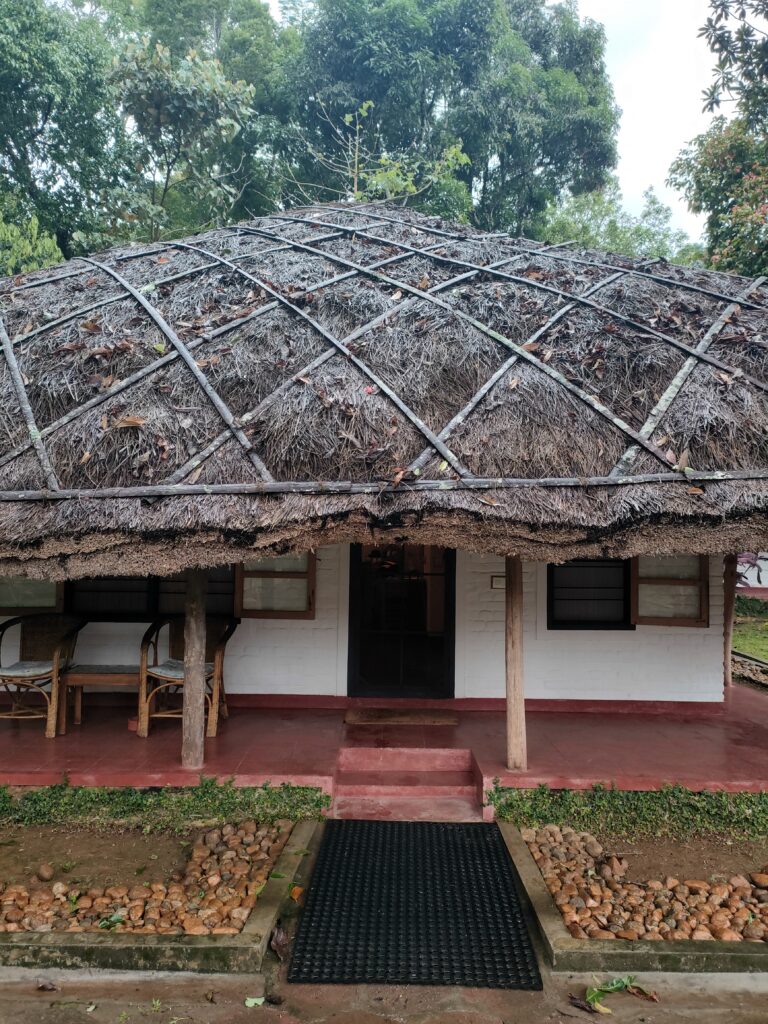
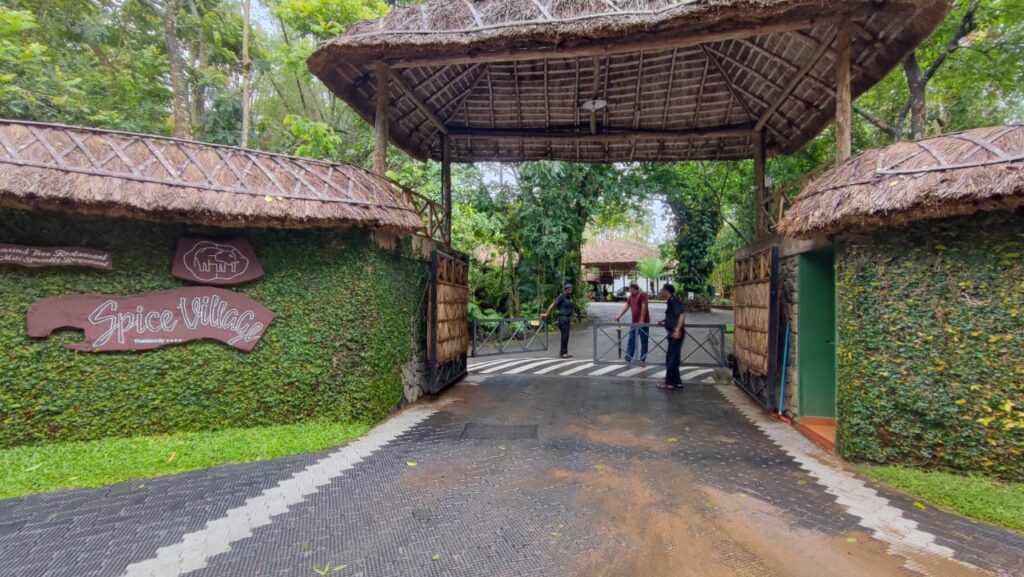
The resort offers free yoga sessions for its guests. We started our day with yoga, followed by a morning walk for about an hour with a naturalist around the property, even though it was raining, but thankfully not too much. There is always so much to learn and explore… following the walk, there was a handmade paper making session, our teenager tried his hand at paper making.
We were to visit Periyar wildlife sanctuary today, but due to the weather alert, the government had cordoned off all forest and water activities in the entire state.
We looked for activities nearby and found an elephant ride which was open and was quite close to the resort, and also on our driver’s suggestion, bought tickets for an evening show of Kalaripatu for Rs. 300/- per person at the Kadathanadan Kalari Centre. They also have a show for Kathakali, but our preference was for Kalaripatu.
Travel Tip #6 - Kalaripatu Show at Kadathanadan Kalari Centre is a must watch
Kalaripayattu/Kalaripatu, is an ancient and vibrant martial art that traces its roots back over three millennia to Kerala, India. The term is derived from the Malayalam words kalari (meaning training arena) and payattu (meaning combat or practice), together signifying the disciplined art of battlefield training.
Day 8: Thekkady – Munnar
After a yoga session and a hearty breakfast, it was time for us to move on to our final destination on this trip. It was a scenic drive among the lush greenery and the winding roads, the fresh air, and occasional rainy stretches.
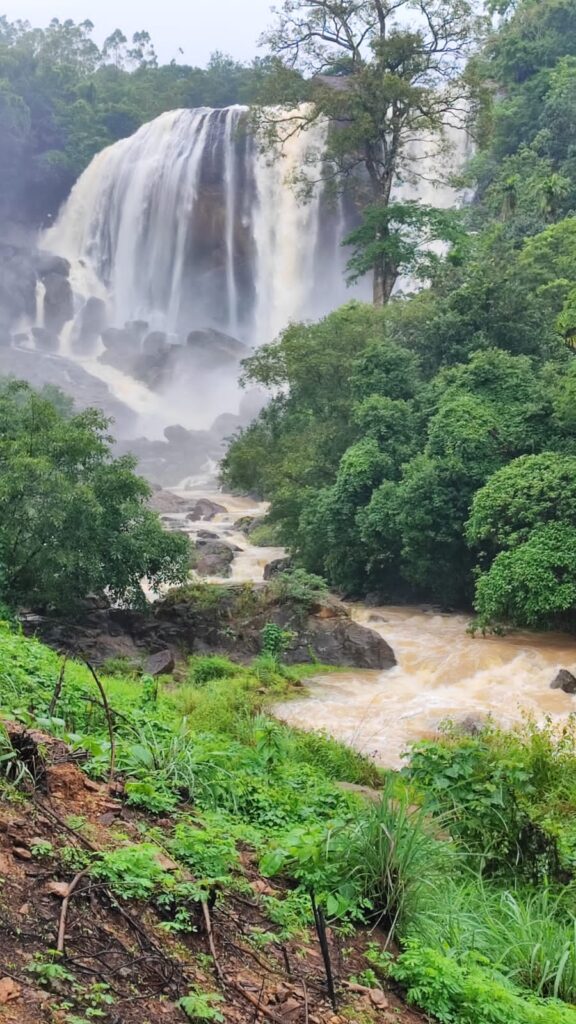
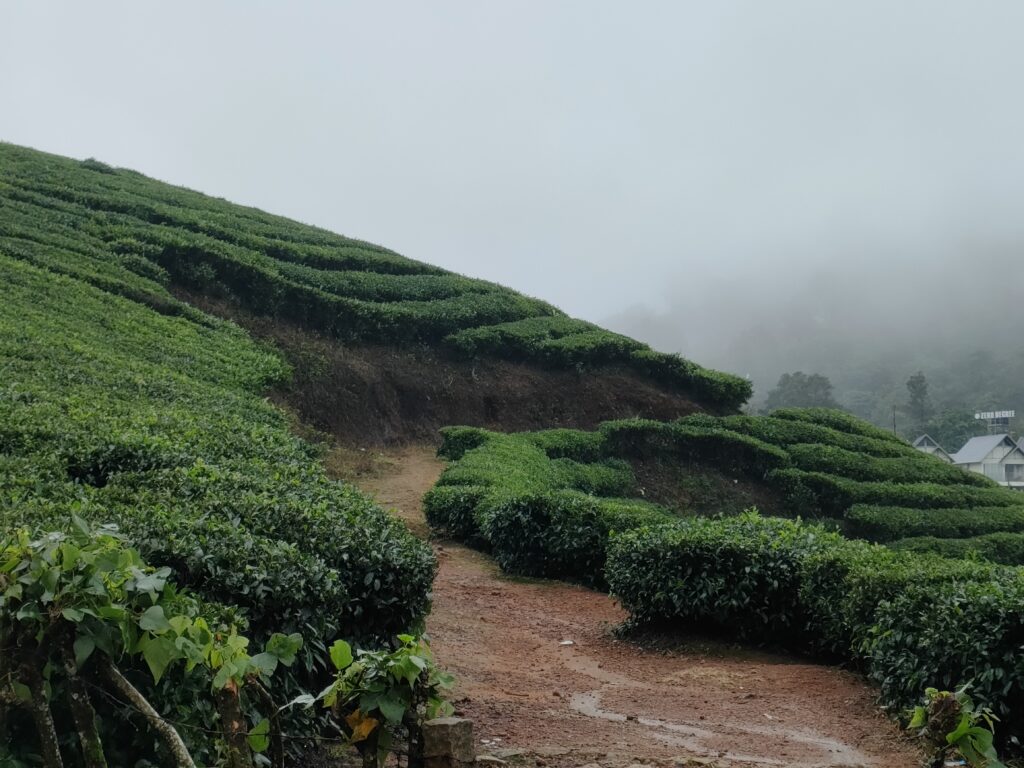
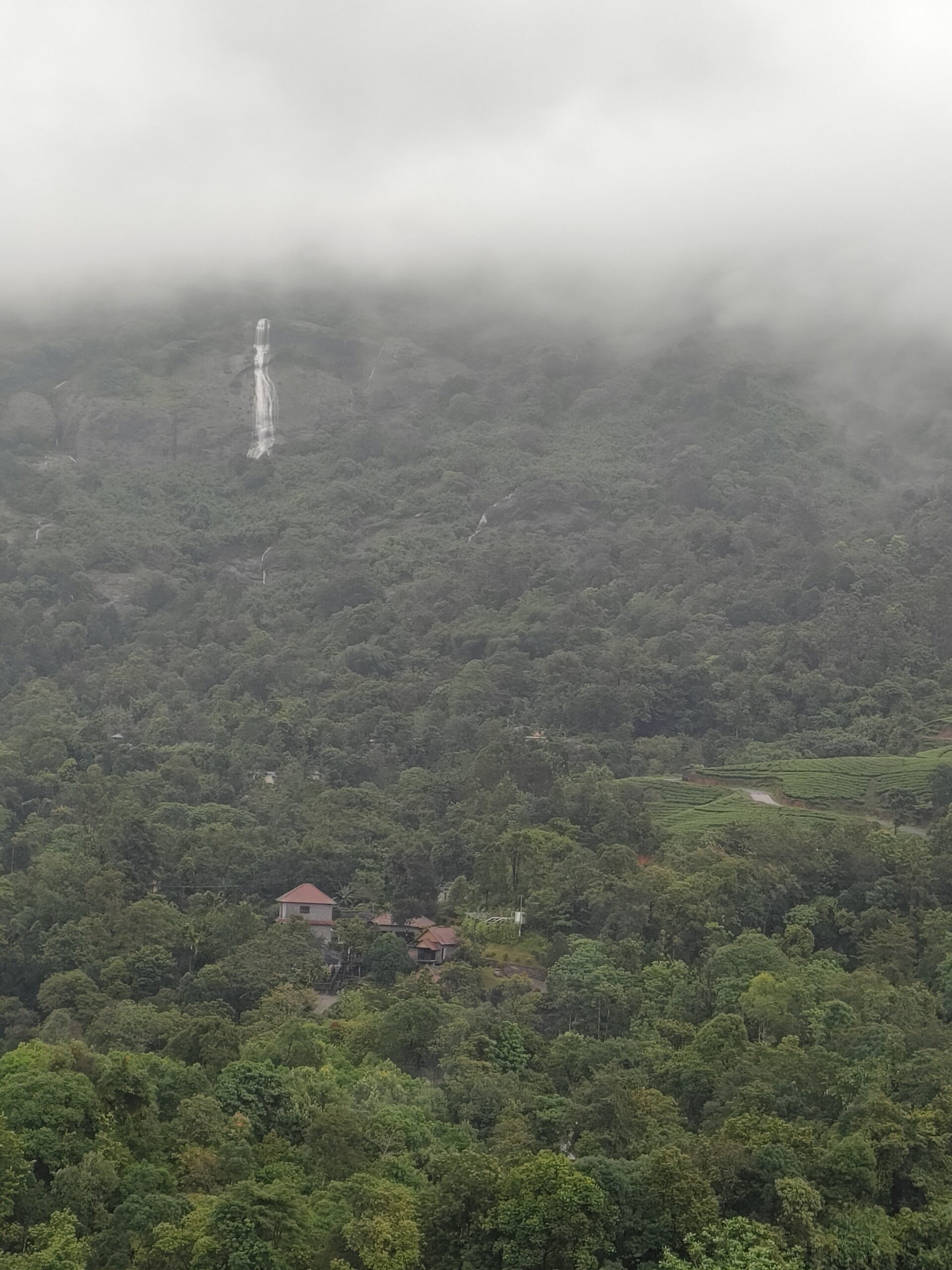
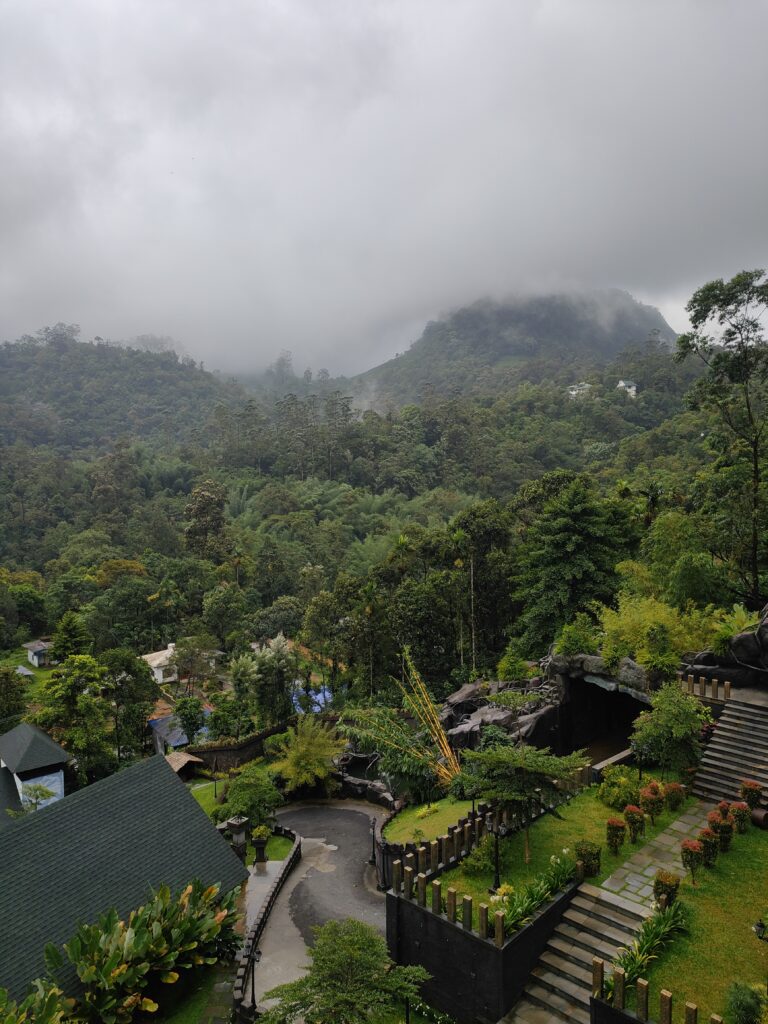
It took us about 4 hours to get to The Grand Cliff Resort, Munnar. A luxurious retreat offering stunning views of mist-covered mountains and verdant tea gardens, punctuated by cascading waterfalls. The view from our room was undoubtedly one of the most breathtaking we experienced on this trip
Enjoyed a relaxing evening with a cooking demonstration and high tea.
Day 9: Munnar
Since it was an alert by the weather authorities, all activities around the place were closed. We started the day with a yoga session, followed by a hearty breakfast.
Travel Tip #7 - Check weather reports especially during the monsoons
Sitting on the balcony, soaking in the breathtaking view with a hot cup of tea….what more could we ask for… spent the day relaxing and rejuvenating, preparing ourselves to take on the world, on getting back to Mumbai.
Evening had another cooking demonstration and added a few more Kerala dishes to add to my culinary skills.
Day 10: Munnar – Kochi – Mumbai
It was time to say Adieu to Kerala as we started for the Kochi airport, about two and a half hours away. The hotel gave us complimentary cut fruit and a bottle of water for our journey.
Since we had a late evening flight, we took a leisurely drive to the airport, on the way stopping at the majestic waterfalls, lunch, and an evening snack at a bakery in Kochi before the drop off at the airport.
Kerala is a haven of diverse water bodies—serene lakes, sun-kissed beaches, tranquil backwaters, thunderous oceans, cascading waterfalls, and winding rivers, all woven seamlessly into its breathtaking landscape. Most of our drive during the trip from Kanyakumari to Ashtamudi was through the coastal road.
Kerala’s coastline is a mesmerizing blend of golden sands, swaying coconut palms, and endless horizons where the Arabian Sea kisses the shore. With its tranquil backwaters weaving through lush landscapes, vibrant fishing villages dotting the coast, and sunsets that paint the sky in hues of amber and crimson, Kerala embodies the soul of tropical serenity. From the untouched beaches of Varkala to the magical confluence of rivers and sea in Poovar, every stretch of coastline tells a story of nature’s grandeur. It is where age-old lighthouses stand tall, guarding tales of seafarers from centuries past. This coastal paradise isn’t just a destination—it’s an experience that lingers in the heart long after the tides retreat.
Vellam (വെള്ളം) – Bye for now, Kerala!