As a dedicated practitioner of yoga (Thanks to yoga_with_mat) and Surya Namaskar for the past few years, I found myself drawn not just to the physical benefits of the practice, but to the philosophy and symbolism that underpin it. This curiosity led me to the enlightening work Surya Namaskar: A Sacred Sequence of Solar Vitalization by Swami Satyananda Saraswati, published by Bihar Yoga. The insights I gained were too profound to keep to myself, so I felt compelled to share them with others who seek a deeper connection to their practice.
This article is inspired largely by the teachings in that book, to bridge the gap between movement and meaning, offering readers a glimpse into the sacred science behind Surya Namaskar.
The practice of Surya namaskar was originally devised with 2 main aims in mind
- To maintain good physical health as part of an enlightened system of living
- To prepare for the techniques of kundalini yoga and spiritual awakening
It is popularized in the modern day by yoga schools like Hatha, Vinyasa, and Ashtanga.
Surya Namaskar Postures
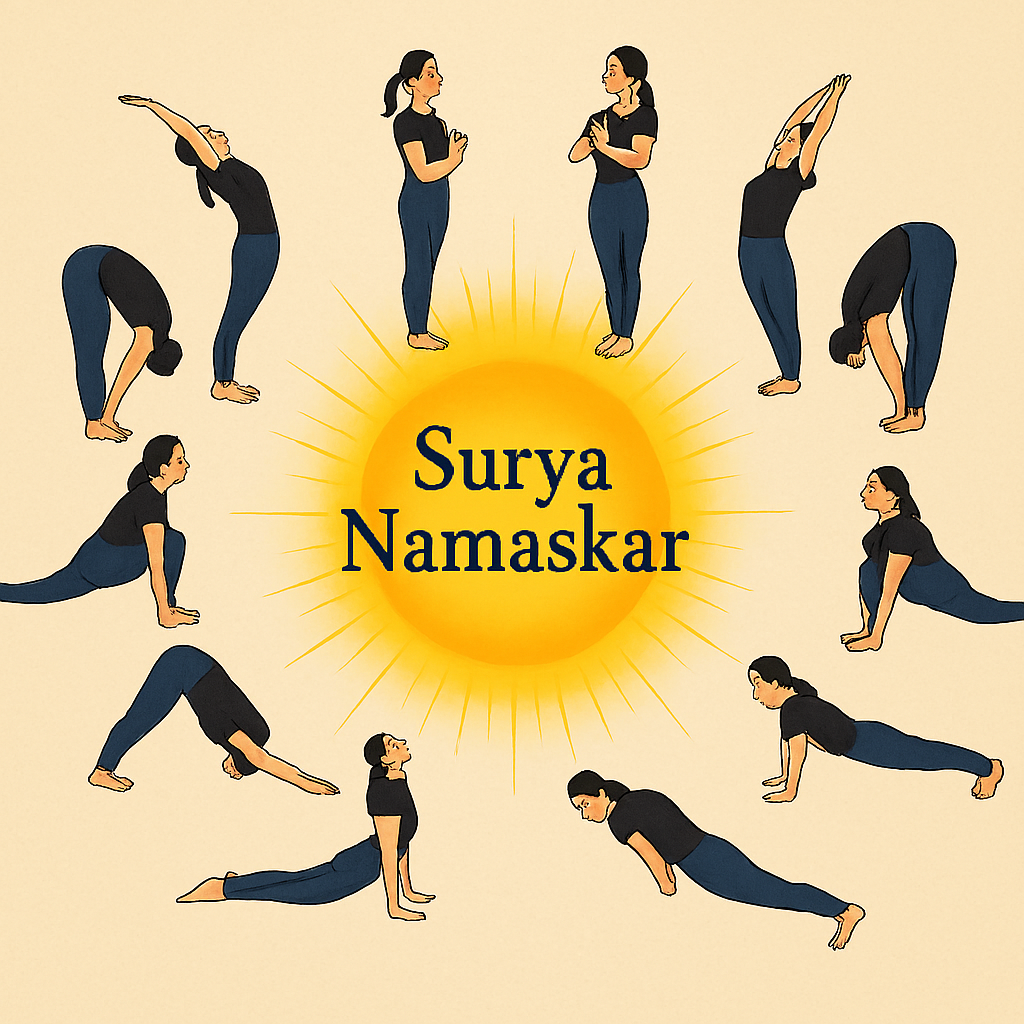
Surya(sun) Namaskar (Salutation) is a dynamic sequence of twelve yoga postures performed in a graceful rhythm. Each round of Surya Namaskar includes:
- Pranamasana – Prayer Pose. Standing with palms together at the chest, grounding and centering.
- Hasta Uttanasana – Raised Arms Pose. Arms stretch overhead, slight backbend, opening the chest.
- Padahastasana – Hand to Foot Pose. Forward bend, hands to the floor, head toward knees.
- Ashwa Sanchalanasana – Equestrian Pose. One leg back, the other knee bent, chest lifted.
- Parvatasana – Mountain Pose. Hips raised, forming an inverted V (similar to Downward Dog).
- Ashtanga Namaskara – Eight-Limbed Salute. Chest, chin, hands, knees, and toes touch the floor—body lowered in devotion.
- Bhujangasana – Cobra Pose. Chest lifts, elbows bent, back arched gently.
- Parvatasana – Mountain Pose (again). Returning to the inverted V shape.
- Ashwa Sanchalanasana – Equestrian Pose (opposite leg forward). Mirroring the earlier lunge.
- Padahastasana – Hand to Foot Pose. Forward bend again.
- Hasta Uttanasana – Raised Arms Pose. Arms rise overhead, slight backbend.
- Pranamasana – Prayer Pose. Back to the starting position.
Origins and Philosophy
Swami Satyananda traces the lineage of Surya Namaskar to the Vedic era, when the sun was worshipped as a symbol of divine consciousness. The twelve-posture sequence is not merely a set of exercises—it is a ritual of reverence, designed to awaken prana (life force) and harmonize the body, mind, and spirit.
Each posture corresponds to a specific mantra and point of concentration, creating a multidimensional experience that integrates movement, breath, sound, and awareness. The integration of Surya Mantras and Bija Mantras (seed sounds) elevates the practice beyond the physical. Each posture is paired with a mantra that invokes the sun’s qualities—illumination, strength, wisdom, and healing. The practice becomes a moving meditation, channelling solar energy into the practitioner’s being.
| Asana Name | Sanskrit Mantra |
| Pranāmāsana | Om Mitrāya Namaḥ |
| Hastauttānāsana | Om Ravaye Namaḥ |
| Padahastāsana | Om Sūryāya Namaḥ |
| Aśvasañcālanāsana | Om Bhānave Namaḥ |
| Daṇḍāsana | Om Khagāya Namaḥ |
| Ashtāṅga Namaskāra | Om Pūṣṇe Namaḥ |
| Bhujangāsana | Om Hiraṇyagarbhāya Namaḥ |
| Parvatasana | Om Marīcaye Namaḥ |
| Aśvasañcālanāsana | Om Ādityāya Namaḥ |
| Padahastāsana | Om Savitre Namaḥ |
| Hastauttānāsana | Om Ārkāya Namaḥ |
| Pranāmāsana | Om Bhāskarāya Namaḥ |
Surya Namaskar is more than just a warm-up—it’s a full-body workout, a meditative ritual, and a spiritual offering rolled into one. Practicing it daily can harmonize body, breath, and mind, setting a powerful tone for the day ahead.
Physical, Physiological, and Therapeutic Benefits
In addition to enhancing physical flexibility, strength, and balance, the practice of Surya Namaskar brings in hordes of Physiological and Therapeutic Benefits
1. Harmonizing the body’s Biorhythm
Surya Namaskar harmonizes beautifully with the body’s natural biorhythms—cyclical patterns that govern our physical, emotional, and mental states. In the book, Swami Satyananda Saraswati categorizes these rhythms into internal and external types, each defined by their frequency.
According to the theory of biorhythms, the external and internal rhythms can be classified according to frequency in the following ways:
- Low frequency – seasons and monthly cycles
- Moderate frequency – the respiratory and heart cycles
- High frequency – the pulsation of enzymatic systems or the atoms in a crystal.
Internal rhythms include heartbeat, respiration, and brainwave activity, which operate on short, rapid cycles. External rhythms, such as circadian (daily), lunar (monthly), and seasonal (annual) cycles, unfold over longer periods and are influenced by environmental factors like sunlight and temperature.
By practicing Surya Namaskar at sunrise, we align with the circadian rhythm—when melatonin levels drop and cortisol rises—naturally preparing the body for alertness and activity. This synchronization enhances vitality, mental clarity, and emotional balance. The practice becomes not just a physical exercise, but a way to tune the body’s internal frequencies with the external rhythm of the cosmos, fostering holistic well-being.
2. Cardiorespiratory Regulation
- Surya Namaskar synchronizes breath with movement, improving lung capacity and oxygen exchange.
- It enhances heart rate variability (HRV), thereby strengthening the balance between sympathetic and parasympathetic activity within the autonomic nervous system.
- This improves circulation, optimizing oxygen delivery and waste removal.
3. Metabolic Rhythm
- The sequence stimulates glucose metabolism and lipid utilization by rhythmically engaging multiple large muscle groups.
- Regular practice helps regulate blood sugar levels, aiding in the prevention or management of metabolic syndrome and diabetes.
- It also improves thyroid activity, balancing energy expenditure and basal metabolic rate (BMR).
4. Digestive and Excretory Functions
- The bending and stretching motions massage abdominal organs, stimulating peristalsis and secretion of digestive enzymes.
- This rhythmically regulates digestion, aligning gut function with circadian rhythms.
5. Neuro-hormonal Balance
- Surya Namaskar activates the hypothalamic–pituitary–adrenal (HPA) axis in a moderate, balancing way — not overstimulating like high-intensity exercise, but not too passive either.
- This promotes stable cortisol rhythms, which regulate stress response, sleep-wake cycles, and immune function.
6. Musculoskeletal and Lymphatic Circulation
- The flow of postures acts as a “pump” for lymphatic circulation, improving immune surveillance and detoxification.
- It maintains joint health and muscular elasticity, which operate on daily-use frequency rather than slow structural changes.
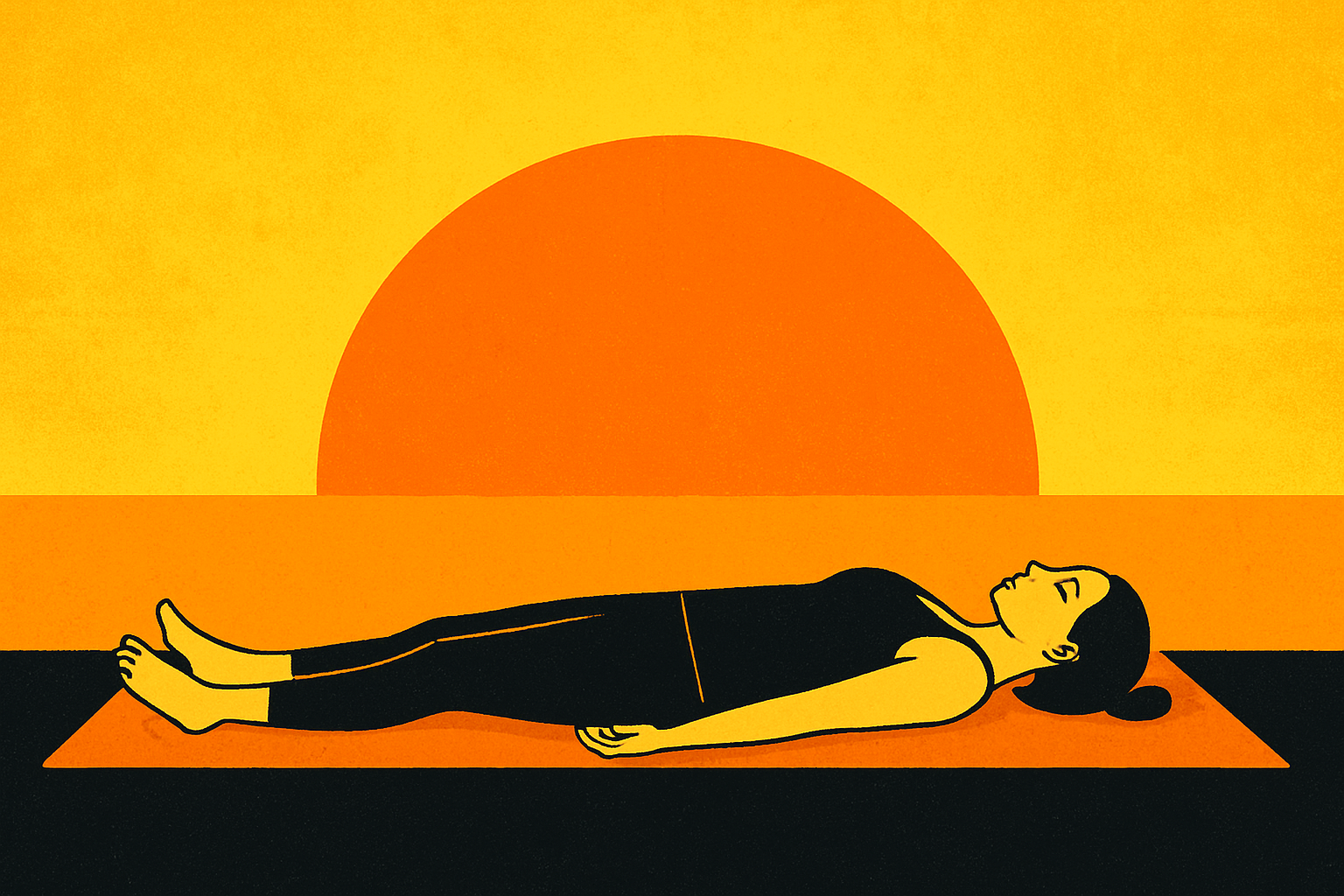
In Surya Namaskar, some exertion is required to perform the sequence of postures. This is indicated by the increased heart rate and deep breathing, which correspond to arousal of the sympathetic nervous system. The relaxation in Shavasana afterwards allows the parasympathetic nervous system to operate, reversing the effects of arousal and returning the body to a balanced state.
This holistic impact makes it suitable for practitioners of all levels—from beginners seeking vitality to advanced yogis pursuing spiritual refinement.
Practice Tips for At-Risk Individuals
- No food should be taken for at least 3-4 hours before the practice
- Always warm up with gentle movements before starting.
- Avoid overexertion—listen to your body.
- Practice under the supervision of a qualified yoga instructor.
- Modify poses using props or support when needed.
Surya Namaskar is not just a morning routine—it is a sacred dialogue with the sun, a ritual of awakening, and a path to inner radiance. In a world often disconnected from nature and spirit, this practice offers a return to source—a way to greet each day with reverence, vitality, and grace.
So tomorrow morning, roll out your mat, face the rising sun, and let your body become a hymn of light.